
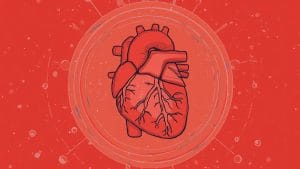
The New England Journal of Medicine has published a case study describing a 51-year-old woman whose right heart failure produced a striking and unusual physical sign — a visibly pulsating liver.
The case, posted by the New England Journal of Medicine (@NEJM) on X, centres on a woman who arrived at hospital with worsening abdominal swelling and leg oedema (fluid build-up in the legs). Doctors examining her found a grade 4 out of 6 holosystolic heart murmur — a loud, continuous whooshing sound heard throughout the pumping phase of each heartbeat — alongside fluid in the abdomen (ascites) and, unusually, a liver that pulsed visibly with each heartbeat.
A pulsatile liver is a recognised but uncommon finding in severe right-sided heart failure, where the right ventricle struggles to pump blood forward into the lungs. Pressure backs up into the large veins that drain into the liver, causing it to swell and throb in time with the heart. The journal published video footage of the sign as part of its Images in Clinical Medicine series, which highlights unusual or instructive physical examination findings.
Right heart failure can develop from a range of underlying causes, including damage to the heart valves — the holosystolic murmur in this case suggests significant valve involvement, though the journal does not specify the exact diagnosis in the social media post.
So why does this matter to readers who aren’t cardiologists? Because the early symptoms — leg swelling, a growing abdomen, breathlessness — are easy to put down to less serious causes. Getting checked promptly makes a difference.
Anyone in Kent experiencing unexplained leg swelling, abdominal distension, or breathlessness should contact their GP in the first instance. If symptoms come on suddenly or feel severe, NHS 111 can advise on the right next step. In an emergency, call 999.
Key information
- GP referral: Contact your GP if you notice unexplained leg swelling, abdominal bloating, or shortness of breath
- NHS 111: Call 111 for urgent but non-emergency advice, available 24 hours a day
- Emergency: Call 999 if breathing becomes severely difficult or you experience sudden chest pain
Source: @NEJM
Heart Failure Case Raises Awareness of Rare Liver Sign Quiz
5 questions